
Tai Po Literary Trail Virtual Exhibition
1. Goal
Reason for this work“Jiujikpark”Developed jointly with the center’s team, Sanseedou Cultural Circle, a virtual exhibition for the “Tai Po Literary Trail─New Territories East Literary Promotion Project” that can be viewed on different electronic platforms is produced. This project originally planned to set up a physical permanent exhibition in Tai Po District, displaying dozens of exhibits to present Tai Po’s artistic development over the past century. However, since planning, it has been discovered that there is a shortage of exhibition space in the district, and long-term management is extremely difficult. On the other hand, the research center has accumulated various production experiences under the name of Three-Colored Bean Cultural Circle since 2020: “Points to Hong Kong Literature”, “Three Cent Novels Adventure”, and “Thirty-cent Novel Research Project Exhibition”. Therefore, the permanent exhibition of this project has been changed to a virtual exhibition, and on this basis, we have found another place to hold irregular physical exhibitions.
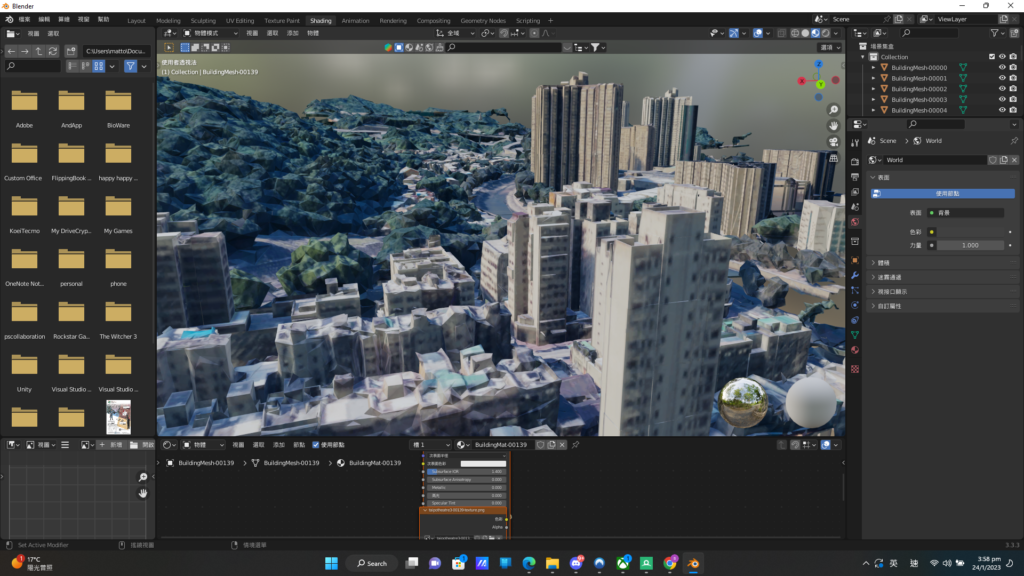
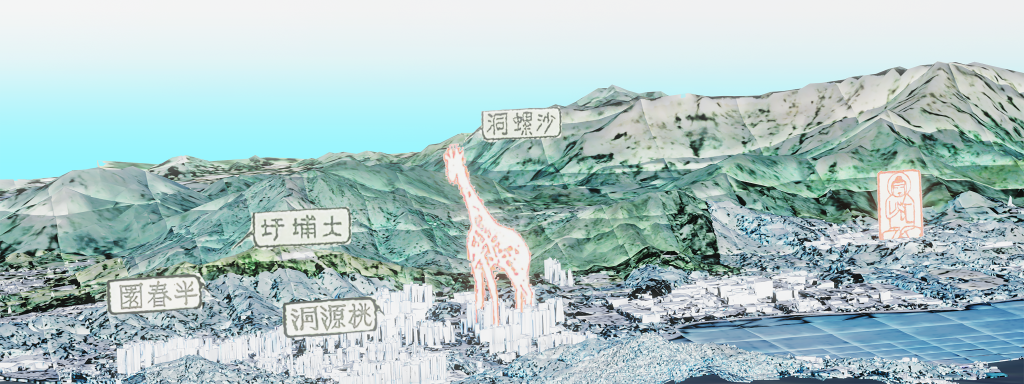
The permanent exhibition is currently a 2D version produced by RPG Maker as a trial exhibition. The ultimate goal is to create a 3D permanent exhibition.
Open the virtual exhibition in a new window
2. The disappeared Tai Po Theater
One of the research topics of Tai Po Literary Trail is to investigate the past literary and cultural places in the area, such as the “Tai Po Library” of the first-generation Heung Yee Kuk on Shung Tak Street and the “Green Qi Garden” where Tang Erya collected pianos. During the process, we found that the first-generation “Tai Po Theater” that was once located on Theater Street (now the site of Ming Yuet Building) also has great literary significance. First of all, this is the place where sky novelist Li Wo (1922-2021) was inspired by Cantonese opera. He once mentioned in “Li Wo Talks about Ancient Times” that he was inspired by Cantonese opera at the “Tai Po Theatre”.
In the early days of the Japanese colonial rule, I was performing in a teahouse. Soon after the class ended, Kuang Shanxiao (I called him San Ge, who was the president of the Bay Wo Association at the time) introduced me to the mountain climbing class in Tai Po as a tent performer (i.e. a musician, also known as “off the shelf” in the industry).[It is doubtful whether Tai Po Old Market is still Tai Po Market in Tai Wo City]A performance in a theater converted from an ancestral hall.
The troupe’s initial performance was quite smooth. Unexpectedly, one day, Mei Lingxiao, a young student, suddenly suffered from colic and was admitted to the hospital. Then Kuang Shan smiled and asked, “Where can I find a young man to replace him in a remote and remote country in such an instant?”
Readers can predict that the performance failed. In that performance, “The Civet Cat for the Prince”, Li Wo temporarily played the role of eunuch Chen Lin, and finally collapsed in the scene of beating Kou Zhu to death. Later, in the interview compiled by Huang Ai-ling in “The Affair of Guangdong and Hong Kong Movies”, Li Wo also mentioned this experience of acting in Tai Po again, but this time he said that he was copying music in the theater, and once he succeeded, the theater troupe asked him to be an Okura instead of a counter. Li Wo’s statement is inconsistent, but it is certain that he started his creative career in Tai Po. Secondly, before the Tai Po Theater was abandoned in the 1960s, it served various functions as a “cultural center” and “community hall” in Tai Po Market. Fund-raising and disaster relief activities, family gatherings, and Heung Yee Kuk meetings were all held there. Even during the Japanese occupation, it had a history of being converted into an “entertainment venue” (although it is not a glorious history). In addition, the rise and fall of theater facilities has been a topic on the minds of Tai Po residents for many years. Gradually, the planned virtual exhibition to recreate the location and present the research results began to be linked to the inspection of the Tai Po Theater.
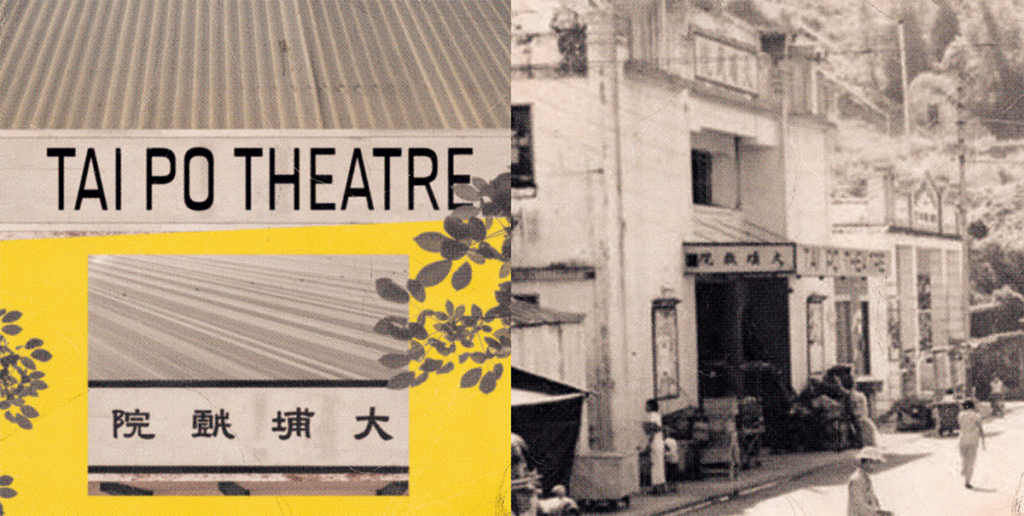
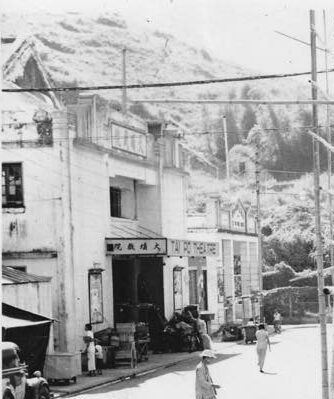
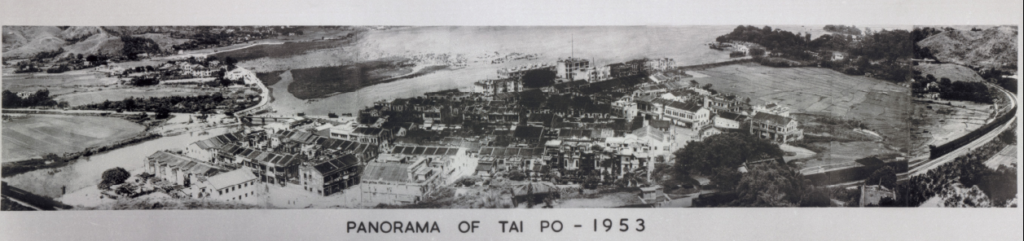
(Picture on the left: A group photo of the opening of Ling Liang Church’s Tai Po branch, with the Tai Po Theater on the far left. The picture is reproduced from Ms. Luen Hui’s interview and Mr. Luen Shi’s“Old Photos of Tai Po”Photos provided by the group. The first picture below is a group photo commemorating the 60th anniversary of the opening of Tai Wo Market. The main entrance of Tai Po Theater is in the background. It is reproduced from the photo published by Mr. Zhu Sum, an old photo of Tai Po. The second picture below is a panoramic view of Tai Po Market in 1953 purchased from the Government Information Department and published in the 1993 Hong Kong Annual Report. The Tai Po Theater is above the word “PANORAMA”. Since the information is hard to find, I am using pictures from various places to provide some inspiration. I hope more people can provide historical information about Tai Po Theater. If there is any copyright infringement, please contact us.Contact Us Take the photo down. )

3. Re-engraving strategy, from restoration to re-creation
The Tai Po Literary Trail research team, on the one hand, commissioned senior researchers to search through historical books and periodicals, trying to find more specific clues to the Tai Po Theater literature. Researchers reported that although it was confirmed that the Tai Po Theater existed in the 1940s, there was no actual key evidence to support the theory that the theater was established in the early 1930s. On the other hand, through search and investigation, the team was unable to find any information on the condition of the theater before the 1950s.
We tried to ask an architect to make a trial drawing. After the meeting, the architect expressed that it was difficult to draw the drawing based solely on existing photos and suggested that the team seek assistance from local architectural history experts.
Since the accurate original appearance of the building is difficult to find, the team also looked for other ways to deal with the theater issue from the perspective of “the possibility of continuing the first-generation Tai Po Theater”. We collaborated with graphic designer Roger Ng to reconstruct the Tai Po Theater sign by analyzing the fuzzy fonts of the Tai Po Theater sign in old photos, based on the more artistic local signboards from the 1950s that have been preserved to this day. He will also provide input on font design for the production team’s 3D restoration of Cinema Street in the 1950s.
The team also used the only materials in the first stage of the “Tai Po Literary Trail” to create a 2D trial exhibition of “Hong Kong Literature in Tai Po” using RPG Maker MV. The exhibition restores the scene of Tai Po Theater Street, displays more than a dozen pictures related to Tai Po literature, and uses the characters of the “Thirty-cent Novel Research Project”, Hu Boqiang and Midnight Man, as guides.