
Nature Writing Textbook Package: A Guide to Common Insects and Plants in Hong Kong
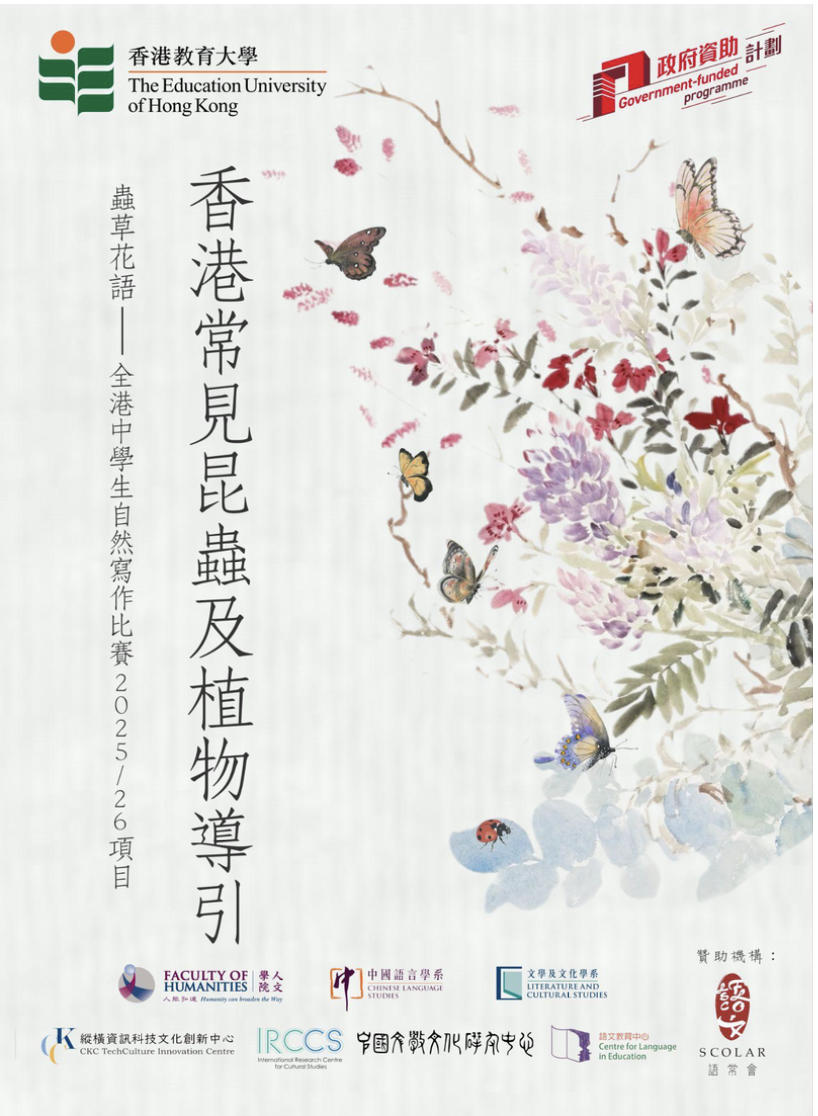
“A Guide to Common Insects and Plants in Hong Kong” lists the common insect (butterflies and moths) species in Hong Kong urban areas, such as papilion butterfly, jade-banded swallowtail butterfly, giant swallow moth, etc., and describes their appearance characteristics, living habits, ecology and protection status, etc. In addition, some common plants (Stone Chestnut, Ficus tenuifolia) will also be introduced, as well as the symbiotic relationship between plants and insects, their role in Hong Kong’s natural ecology, and the survival challenges they face.
The guide will introduce the preparations before butterfly viewing, including butterfly viewing equipment (such as magnifying glass, butterfly illustration, notebook), clothing (clothing and shoes suitable for outdoor activities) and code of conduct (such as keeping quiet and not disturbing the butterflies). Practical butterfly watching skills, methods of identifying butterfly species and butterfly watching locations in Hong Kong will also be provided. Daoyin has also compiled online resources for writers to learn about insects on their own, allowing writers to learn ecological knowledge related to butterflies on their own.Click here to download: “Guide to Common Insects and Plants in Hong Kong”
Nature Writing Writers’ Workshop (2): Keluo teaches you how to write about nature in the city
Nature Writing Writers’ Workshop (3): Xu Zhuoxian shares marine life writing with you
Nature Writing Textbook Set: Nature Writing Teaching Unit (蟲草花語)
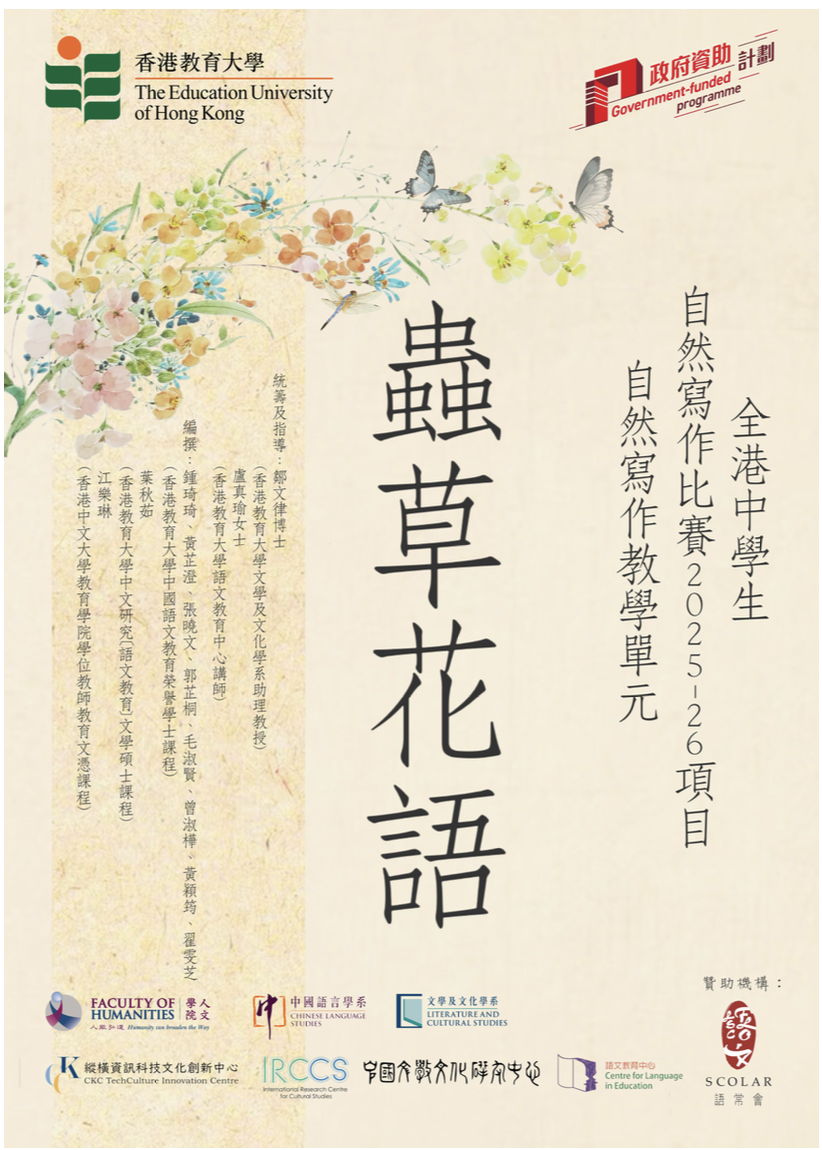
In order to more effectively promote nature writing to the academic community, this project has specially designed this teaching unit with the theme of “Insects and Plants”. In addition to teaching students knowledge about key insects and plants, and arousing their care and appreciation for natural ecology, it also hopes to popularize the concept of nature writing to the academic community to improve students’ writing skills. This unit adopts a “reading and writing” teaching method, that is, reading excellent literary works to stimulate students’ writing inspiration and skills. Its core is to encourage students to be exposed to different writing styles, language expressions and stylistic features during the reading process, so that they can have a deeper understanding of the structure of the work and various writing expressions. By analyzing and discussing these texts, students can learn how to transform knowledge and acquired skills into their own creations, improving their writing abilities.
This unit mainly consists of six essays on insects and plants, aiming to inspire students to think and analyze the author’s writing style and work structure. The first section mainly provides students with a preliminary understanding of the ecology, living conditions and body structures of insects and plants in Hong Kong. The second section will read the article, cooperate with teaching activities to cultivate students’ ability to analyze the structure of the article, and lead students to explore the writing skills of different paragraphs. In the third section, the text will guide students to reflect on the relationship between “human” and “nature”. Finally, this unit will guide students to apply what they have learned and write a writing outline, with a view to finally completing a nature essay on insects and plants.
Teachers and users of each school can adjust the content of this unit to suit the actual situation of students.
Click here to download: “Teaching Design for the “蟲草花語” Unit”
Click here to download: 蟲草花語 [Teacher’s Edition] Worksheets and Reading Chapters
Click here to download: 蟲草花語 [Student Edition] worksheets and reading chapters